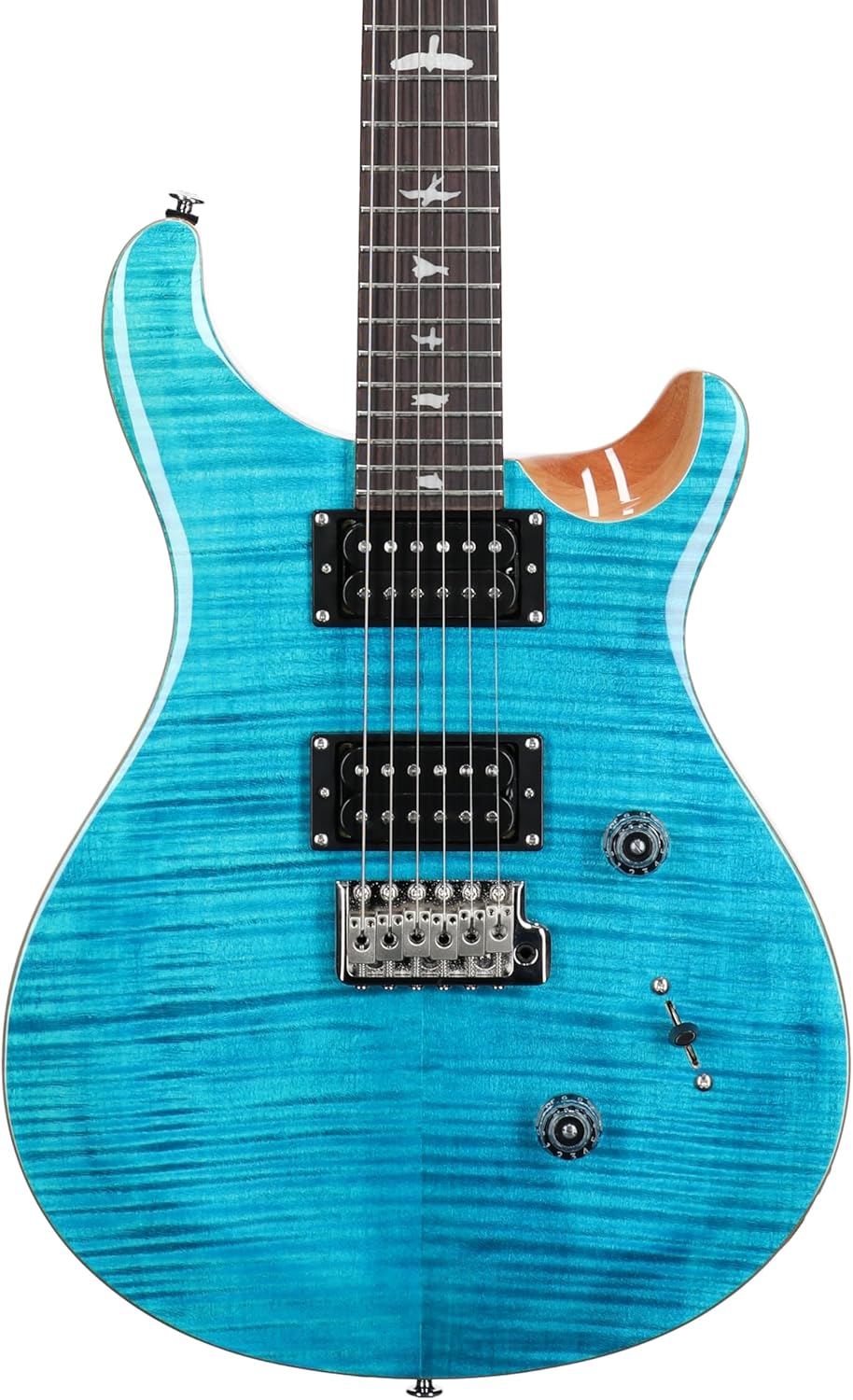
If you’ve been playing guitar for a year or two and you’re starting to feel like your current instrument is holding you back — like the frets buzz a little more than they should, the tuners slip, or the sound just feels a bit thin compared to what you hear in recordings — you’re probably right. That feeling is real, and it usually means you’ve outgrown your starter guitar. The next question is where to put your money. At the $800–$850 range (street prices as of mid-2026), the PRS SE Custom 24 sits in a genuinely interesting spot in the market. PRS stands for Paul Reed Smith, an American guitar maker known for high-end instruments that can cost $3,000–$10,000 or more. The “SE” line — which stands for Student Edition, though the name undersells what these guitars actually are — is their import lineup, built to bring PRS construction and aesthetics to a more accessible price. The Custom 24 is the flagship of that SE range. This guide will tell you exactly what you’re getting at that price, what tradeoffs exist, and whether it’s the right next step for you.
What the SE Custom 24 Actually Is (and Where It Comes From)
The PRS SE Custom 24 is a double-cutaway (that means the body is carved so your fretting hand can reach the higher frets easily) solid-body electric guitar with a maple top — the decorative and tonally relevant wood layer — over a mahogany body. It runs a 25-inch scale length, which refers to the distance between the nut (the small slotted piece at the top of the neck) and the bridge. That’s slightly longer than a Gibson Les Paul’s 24.75 inches and slightly shorter than a standard Fender Stratocaster’s 25.5 inches. In practice, that middle-ground scale contributes to a tone that blends warmth and articulation reasonably well across genres.
The guitar ships with PRS-designed 85/15 “S” humbuckers — humbuckers being a type of pickup (the magnetic device that converts string vibration into electrical signal) that uses two coils wound in opposite directions to cancel hum and deliver a fuller, warmer sound than single-coil pickups. The “S” designation indicates these are the SE-spec version of pickups PRS uses in higher-tier instruments. There’s a coil-tap (a switch that splits the humbucker into a single-coil mode for brighter, thinner tones) wired into the volume knob push-pull function.
The neck is mahogany with a rosewood fretboard, 24 frets (hence the name), and PRS’s wide-thin carve — a profile that players with medium to large hands tend to find comfortable for lead playing. Tuners are PRS-branded, the bridge is a PRS-designed vibrato unit (a tremolo, for pitch-bending effects), and the whole package comes in at approximately 7.5–8 lbs depending on the specific body blank.
Sweetwater’s product page and MusicRadar’s mid-range guitar roundup both position the SE Custom 24 as one of the strongest factory setups at this price — meaning the guitar typically arrives with low action (string height) and good intonation (accuracy of pitch across all frets) without requiring an expensive professional setup right out of the box.
The Tradeoffs You Need to Know Before You Buy
Here’s where the practitioner framing matters. The SE Custom 24 is genuinely good — reviewers at Guitar World and Premier Guitar have consistently called it punching above its weight class — but “above its weight class” still means it has a weight class. These are the real tradeoffs:
Electronics are functional, not exceptional. The 85/15 “S” pickups do their job, but owners in long-run reviews across Guitar World and MusicRadar consistently report that swapping them for aftermarket pickups (Seymour Duncan, Bare Knuckle, or even genuine PRS 85/15 non-S pickups) noticeably opens up the guitar’s voice. The push-pull coil-tap is useful but not seamless — single-coil mode on a coil-tapped humbucker doesn’t quite replicate a true Stratocaster single-coil. If you’re chasing that Fender quack, this isn’t the guitar for it, even in split mode.
The vibrato bridge is a love-it-or-leave-it item. The PRS SE vibrato is decent but owners report it doesn’t return to pitch as reliably as a well-set-up Floyd Rose (a locking tremolo system) or a Fender Synchronized Tremolo on higher-end instruments. If aggressive whammy use is central to your playing, you’ll want to either budget for a professional setup and possibly a nut replacement, or look at a hardtail (non-vibrato) variant.
Maple top aesthetics vs. tonal expectation. The figured maple top on the SE Custom 24 looks striking in photos — it’s part of what makes the guitar visually resemble a Core PRS that costs four times as much. But the top on an SE is a maple veneer over a laminated core, not the solid carved maple cap you’d get on a PRS S2 or Core instrument. Per Fretboard Journal’s overview of the SE line, this is a known and expected construction difference. It doesn’t make the guitar sound bad — it just means the tonal contribution of that maple top is limited relative to what you’d expect from a true carved-top instrument.
The neck carve is specific. The wide-thin profile is genuinely comfortable for many players, but if you’ve been playing chunky vintage-style C-necks (think older Gibsons), the SE Custom 24’s flatter, wider feel can take adjustment. Premier Guitar’s review noted that players coming from thick-necked instruments should ideally try one in person before committing.
By the Numbers
| Feature | PRS SE Custom 24 | Comparable at ~$800 |
|---|---|---|
| Scale length | 25” | Fender Player Tele: 25.5” / Epiphone Les Paul Standard: 24.75” |
| Frets | 24 | Fender Player: 22 / Epiphone: 22 |
| Pickups | PRS 85/15 “S” humbuckers (coil-tap) | Fender Player: Alnico V single-coils / Epiphone: ProBucker humbuckers |
| Street price (mid-2026) | $849 | $799–$849 across competitor models |
| Vibrato included | Yes (PRS SE tremolo) | Fender Player: yes / Epiphone: stopbar tailpiece (no vibrato) |
How It Stacks Up Against the Real Alternatives at This Price
At $800–$850 in mid-2026, you have meaningful competition. This decision deserves honest comparison framing.
Vs. Fender Player Series Telecaster or Stratocaster (~$799–$849): The Player Series instruments are made in Mexico and represent Fender’s core mid-market line. They use American-designed pickups, solid alder or ash bodies (no veneered tops), and Fender’s proven hardware. If your sound goal is twang, country, funk, or classic rock brightness, the Player Tele or Strat is probably the cleaner choice — the voicing is more genre-specific and the single-coil pickups deliver tones the SE Custom 24 can’t fully replicate. But the SE Custom 24’s 24-fret neck and carved top aesthetics give it a leg up for players oriented toward rock, metal, or fusion who want more high-register access and a thicker base tone.
Vs. Epiphone Les Paul Standard ’50s ($599) or ’60s ($649): The Epiphones come in under $800, which matters if you’re managing budget carefully. Owners consistently report that the Epiphone ProBucker pickups have improved substantially in the last three years, and the build quality has tightened. If you’re a Les Paul person (you like the heavy mahogany sound, the shorter scale, the classic looks), the Epiphone will likely satisfy you better than the SE Custom 24 at a lower price point. The SE Custom 24 is the better choice if you want the PRS aesthetic, the vibrato, and the 24-fret neck.
Vs. Yamaha Pacifica 612V (~$799): MusicRadar’s mid-range roundup notes the Pacifica 612V as a frequent dark horse recommendation — solid alder body, HSS pickup configuration (one humbucker, two single-coils), and famously reliable Yamaha build quality. If versatility across clean, crunchy, and bright tones matters more to you than a specific aesthetic identity, the 612V is worth a serious look before you commit to the SE.
The PRS SE Custom 24 wins when the buyer wants: a vibrato-equipped guitar with humbucker voice, 24 frets, a neck profile suited for lead playing, and the PRS visual identity — at a price that doesn’t require compromising on setup quality out of the box.
Who Should Actually Buy This Guitar
Based on aggregated owner reports across Guitar World, Premier Guitar, and Sweetwater’s verified buyer reviews, here’s the honest decision matrix:
Buy the SE Custom 24 if: You’re coming from a beginner guitar in the $150–$400 range and want a significant, all-around upgrade. You play rock, hard rock, or fusion and you want humbuckers with the option to thin them out. The PRS neck feel appeals to you (wide and flat rather than thick and chunky). You like a vibrato but aren’t planning aggressive dive-bomb playing. And you want a guitar that looks like it costs significantly more than it does — because in terms of fit and finish, it largely does.
Don’t buy the SE Custom 24 if: You primarily play styles that demand true single-coil tone (country, surf, vintage funk). You want to avoid a vibrato system entirely. You’re already eyeing a PRS S2 Standard 24 (around $1,099–$1,199 street) and can stretch your budget — the S2 uses USA-made components and a different construction tier that owners report delivers a meaningful jump in feel and sustain.
Consider upgrading the pickups if you do buy it: Budget an extra $100–$200 for a pickup swap (Seymour Duncan JB/Jazz set is a common recommendation among SE owners in long-run Guitar World reader reports) if you want to extract the full potential of the guitar’s body and neck. The hardware is solid enough that this single change tends to be the upgrade that most substantially changes the instrument’s character.
One final note on the market as of mid-2026: the SE Custom 24 is widely available new through Sweetwater and Guitar Center with standard retailer warranties, and the used market on Reverb tends to run $550–$700 for clean examples, which represents strong value if you’re comfortable buying second-hand. At that used price, the electronics upgrade becomes a near-certainty cost of admission — but the total spend still lands under $900 for a genuinely serious instrument.
If you want the PRS DNA, the versatility of a 24-fret humbucker guitar with a working vibrato, and a setup that’s ready to gig without immediate intervention, the SE Custom 24 at $849 is one of the more defensible spends in this price tier. Just go in with clear eyes about what the maple top is, what the vibrato’s limits are, and what a pickup swap might unlock. That’s the full picture.